
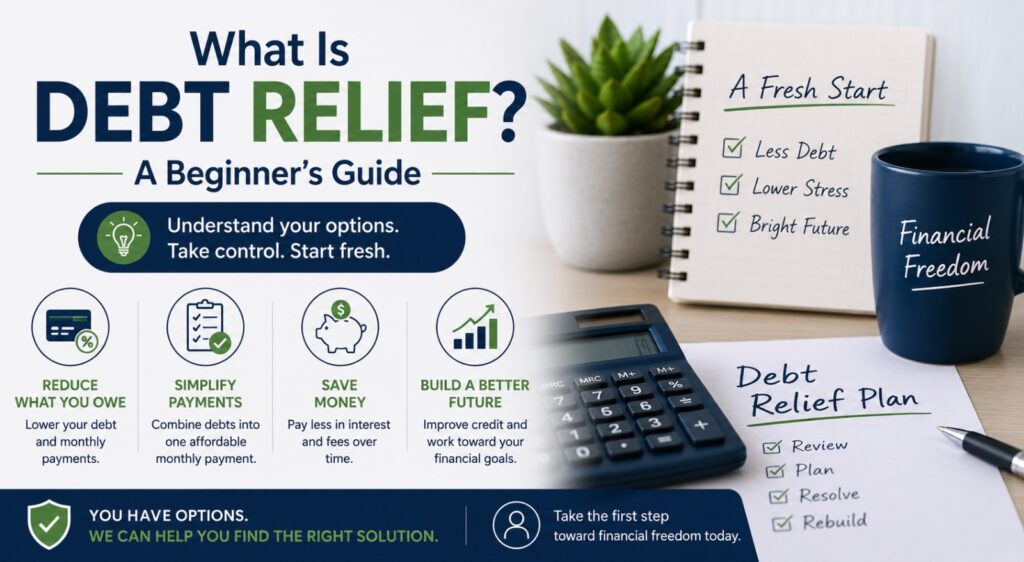
Debt can feel like a heavy weight that never lifts. If you are drowning in bills, credit card statements, or medical expenses, you are not alone. Millions of Americans search for real answers every year, and the good news is simple: debt relief is possible, and it works.
What Does Debt Relief Actually Mean?
Debt relief is a broad term for strategies that help you reduce, restructure, or eliminate what you owe. It is not a magic fix, but it is a powerful tool when used correctly. The goal is straightforward: lower your financial burden and give you a realistic path back to stability.
There are several proven options available to consumers across the United States.
1. Debt Consolidation
Debt consolidation combines multiple debts into a single monthly payment, often with a lower interest rate. This method is popular because it simplifies your finances and can save you real money over time.
2. Debt Settlement
Debt settlement involves negotiating with creditors to pay less than what you originally owed. This option is aggressive and effective for people facing serious credit card debt, but it can impact your credit score, so it must be approached carefully.
3. Credit Counseling
Nonprofit credit counseling agencies help you build a debt management plan. A certified counselor works directly with your creditors to lower interest rates and create a structured repayment schedule.
4. Bankruptcy
Bankruptcy is often the last resort, but for some, it is the smartest move. Chapter 7 and Chapter 13 filings offer legal protection and a fresh financial start when nothing else works.
Why Debt Relief Matters More Than Ever
The cost of living across the country continues to climb. Interest rates remain high. Families are stretched thin. That is why debt relief in the florida has become one of the most searched financial topics today. People want clarity, not confusion, and they want a plan that actually works.
Debt Relief and Guardianship in Florida
Debt relief is not only a personal finance issue. It also matters deeply in legal and family situations, especially when it comes to guardianship in Florida. When a court appoints a guardian to manage the finances of a minor, an elderly parent, or an incapacitated adult, understanding financial guardianship becomes essential.
Guardians in Florida are legally responsible for managing the ward’s assets, income, and outstanding debts. If the person under guardianship has unpaid bills, medical debt, or credit obligations, the guardian must know how debt relief options apply within the boundaries of Florida guardianship law. This is where working with a knowledgeable attorney or financial advisor becomes critical. Mishandling debt during an active guardianship case can create serious legal complications.
Families searching for elderly guardianship support in Florida often discover that debt relief planning is a core part of protecting their loved one’s financial future. Whether it involves negotiating medical bills, consolidating outstanding balances, or simply creating a sustainable budget, the right strategy protects both the ward and the guardian from unnecessary risk.
Conclusion
Debt relief is not a sign of failure. It is a strategic decision that puts you back in control. Whether you are an individual struggling with credit card debt, a family exploring debt consolidation, or a guardian managing finances under Florida law, taking action early always leads to better outcomes.
The path forward starts with one bold step: reaching out for the right guidance. You do not have to face this alone, and you do not have to wait until things get worse. Real relief is closer than you think.