
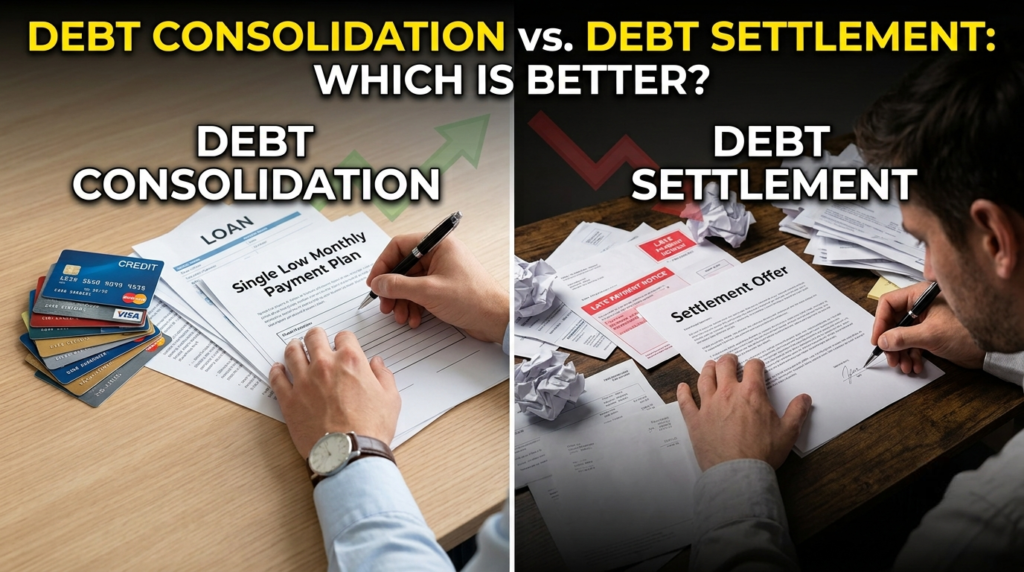
Carrying multiple debts can feel overwhelming, especially when interest rates keep piling on and due dates never seem to stop. Two of the most common paths people consider to regain control are debt consolidation and debt settlement. While they sound similar, they work in very different ways, and choosing the wrong one could cost you time, money, and credit health.
What Is Debt Consolidation?
Debt consolidation combines multiple debts into a single loan or payment plan, typically with a lower interest rate. The goal is simplicity: instead of juggling several due dates and creditors, you make one manageable monthly payment.
Benefits of debt consolidation:
- Simplifies your finances into one predictable payment
- Can lower your overall interest rate
- May improve your credit score over time if payments are made consistently
- Does not require negotiating with creditors directly
Drawbacks:
- Requires decent credit to qualify for favorable rates
- Does not reduce the total amount you owe
- Can extend the repayment timeline if not managed carefully
What Is Debt Settlement?
Debt settlement involves negotiating with creditors to pay a reduced lump sum, often less than what you originally owed. This route is usually pursued when someone is unable to keep up with payments and wants to avoid bankruptcy.
Benefits of debt settlement:
- Can significantly reduce the total debt owed
- Offers a faster resolution than years of minimum payments
- May help you avoid bankruptcy filings
Drawbacks:
- Often damages your credit score in the short term
- Settled amounts may be reported as taxable income
- Creditors are not obligated to agree to a settlement
- Aggressive collection calls may continue during negotiations
Which Option Is Right for You?
The right choice depends on your financial situation. If you have steady income and decent credit, consolidation can simplify repayment without major credit damage. If your debt has become unmanageable and you are already facing collector harassment or lawsuits, settlement (often guided by legal counsel) may offer a faster way out.
This is where professional guidance becomes essential. A debt settlement lawyer in Florida can negotiate directly with creditors on your behalf, often securing better terms than you could alone. If collectors are calling constantly or threatening legal action, a stop debt collectors lawyer in Florida can help halt harassment and protect your rights under federal and state law.
For those already facing lawsuits or garnishment threats, working with a debt defense attorney in Florida ensures your interests are represented in court and that you understand every available option, including consolidation, settlement, or even bankruptcy.
Conclusion
Neither debt consolidation nor debt settlement is universally “better.” The right path depends on your income, credit standing, and how far behind you are on payments. Before committing to either strategy, it is worth speaking with a knowledgeable attorney who can review your situation and recommend the most effective way forward.
This article is for general informational purposes only and does not constitute legal or financial advice. Consult a licensed attorney or financial advisor about your specific situation.