
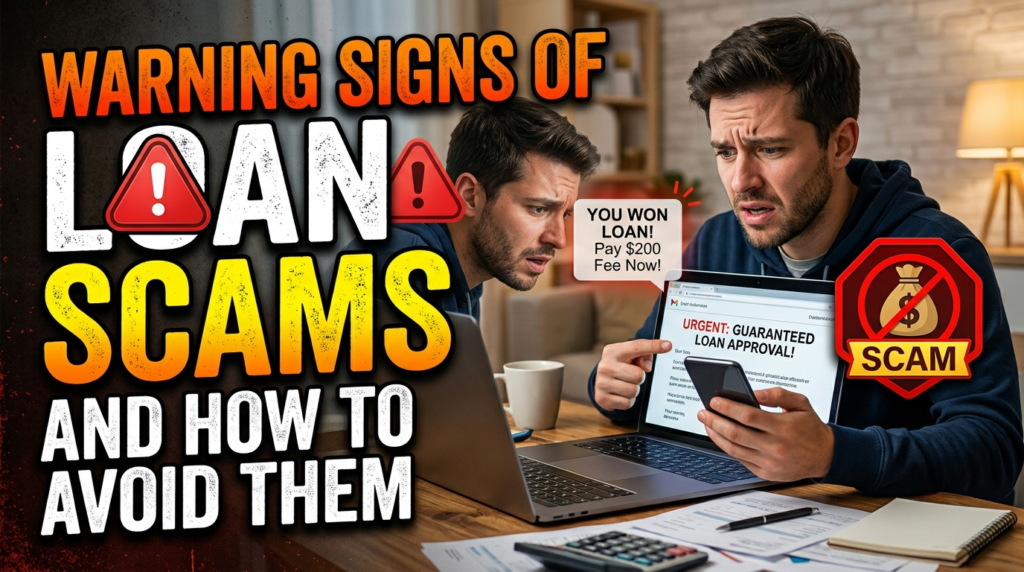
Every year, thousands of individuals fall victim to loan scams, losing not just money but also their personal and financial information. Fraudulent lenders have become increasingly sophisticated, making it harder to distinguish legitimate financial institutions from predatory schemes. Whether you are looking for a personal loan, a business loan, or emergency funds, knowing how to identify a loan scam can save you from significant financial and emotional distress.
What Is a Loan Scam?
A loan scam is a fraudulent scheme in which a fake lender promises quick access to funds while deceiving borrowers into paying upfront fees, sharing sensitive data, or entering illegal agreements. These scams target individuals who are financially vulnerable, often promising guaranteed approvals regardless of credit history.
Common Warning Signs of Loan Scams
Recognizing the red flags early is the most effective way to protect yourself. Here are the most common warning signs to watch out for:
- Guaranteed approval without a credit check: No legitimate lender approves a loan without evaluating your creditworthiness. If a lender promises guaranteed approval regardless of your credit score, treat it as a serious warning sign.
- Upfront fees before loan disbursement: Reputable financial institutions never ask for fees before releasing funds. Scammers often request processing fees, insurance charges, or taxes upfront, which is a classic loan scam tactic.
- Unsolicited loan offers: If you receive a random call, email, or text message offering you a pre-approved loan you never applied for, be extremely cautious. Legitimate lenders do not reach out to borrowers without a prior application.
- No physical address or verifiable contact information: Always verify that the lender has a legitimate business address, working phone number, and a professional website. Loan scammers often operate anonymously and avoid providing verifiable details.
- Pressure to act immediately: Scammers create a false sense of urgency to prevent you from doing proper research. Phrases like “limited time offer” or “act now or lose this deal” are manipulative tactics used to rush your decision.
- Unprofessional communication: Look out for poorly written emails, generic greetings, and inconsistent branding. Legitimate lenders maintain a professional standard of communication at all times.
- Requests for unusual payment methods: If a lender asks you to pay via wire transfer, cryptocurrency, or prepaid gift cards, it is almost certainly a scam. These payment methods are untraceable and preferred by fraudsters.
- No licensing or registration: Every legitimate lender must be registered with the appropriate financial regulatory authority in your country. Always verify the lender’s credentials before proceeding.
How to Avoid Loan Scams
Awareness alone is not enough. Taking proactive steps can significantly reduce your risk of becoming a victim of loan fraud.
- Research the lender thoroughly: Search the lender’s name along with terms like “scam” or “complaint” before applying. Check reviews on trusted platforms and verify their registration with financial regulators.
- Never pay upfront fees: This is the golden rule of loan scam prevention. A legitimate lender will never ask for money before disbursing your loan.
- Verify the lender’s license: Contact your country’s financial regulatory authority to confirm that the lender is officially registered and authorized to operate.
- Read all terms and conditions carefully: Before signing any loan agreement, review every clause. If the terms are vague, confusing, or absent entirely, walk away immediately.
- Consult a financial advisor: If you are unsure about a loan offer, seek guidance from a certified financial advisor or a trusted banking institution before making any commitments.
- Report suspicious activity: If you encounter a loan scam, report it to your local consumer protection agency or financial regulator immediately. Your report can help protect others from the same fraud.
Conclusion
Loan scams thrive on desperation and lack of awareness. The best defense is education. By understanding the warning signs and following safe borrowing practices, you can protect your finances and make informed decisions. Always choose transparency over convenience, and never let urgency override your judgment. When in doubt, trust established financial institutions and seek professional advice before committing to any loan agreement.